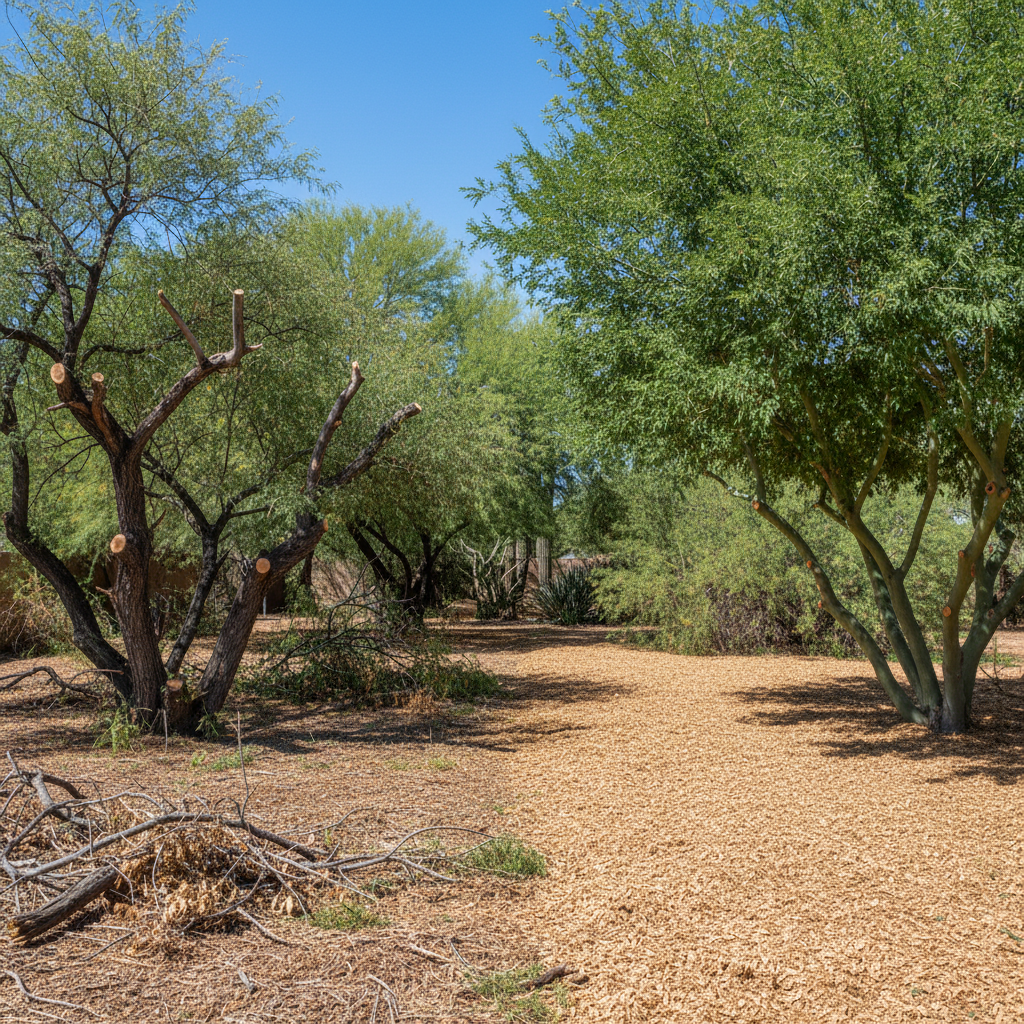
Alright, let's talk about your trees. You've got these beautiful, shade-giving, property-enhancing assets, right? But how do you keep 'em that way without breaking the bank or creating more headaches down the road? I see two main ways folks approach tree trimming around here, and honestly, one's usually a lot smarter than the other, especially with our Arizona weather.
We're going to compare two mindsets: Regular, Proactive Maintenance versus Reactive, Wait-and-See Cleanup. Let's dig into what each means for your wallet, your trees, and your peace of mind.
The "Regular Maintenance" Approach: Staying Ahead of the Game
This is what I recommend, plain and simple. Regular maintenance means you get your trees looked at and trimmed on a schedule. That's usually every 1-3 years, depending on the tree species, its age, and where it sits on your property. You're not waiting for a branch to fall or for the tree to look like a mess.
Cost
Upfront, you might think, "Hey, that's regular money going out." And you'd be right. But here's the kicker: these are typically smaller jobs. We're talking about removing dead or weak branches before they become a hazard, shaping the canopy for better air circulation (crucial for disease prevention in our dry climate), and keeping limbs away from your roof or power lines. Smaller jobs mean less time, less specialized equipment, and ultimately, lower costs per visit. Over the long haul, you spread out the expense and avoid big, emergency bills.
Durability & Tree Health
This is where proactive trimming really shines. When you remove small, problematic branches, the tree heals faster and better. You're reducing the risk of disease getting in through large, open wounds. You also promote a strong, balanced structure. A well-maintained tree is more resilient to high winds, like the ones we get during monsoon season, and less likely to suffer major damage. It lives longer, looks healthier, and provides better shade.
Maintenance for You
Minimal. You schedule the service, we show up, do the work, and clean up. You're not constantly picking up small fallen branches after every gust of wind, and you're not worrying about that big limb over your kid's play area. It's set it and forget it, mostly.
Appearance
Your trees look good, all the time. They're shaped nicely, they're not overgrown, and they're not dropping dead wood all over your yard. It adds to your property's curb appeal, no doubt about it.
The "Reactive Cleanup" Approach: Waiting for Trouble
This is the opposite. This is when you only call a tree service when there's a problem. A big branch breaks, the tree looks like it's dying, or it's grown so much it's hitting your house. You're reacting to an issue, not preventing it.
Cost
This is almost always more expensive in the long run. Emergency calls? They cost more. Removing a huge, fallen limb that's damaged your fence? That's a big, complex job. Dealing with a diseased tree that could have been saved with earlier intervention? Now you're looking at potential removal costs, which are significantly higher than trimming. You might save a few bucks in the short term by not trimming for years, but when something inevitably goes wrong, you pay a premium.
Durability & Tree Health
Not good. When you let problems fester, they get worse. Dead branches can rot, weakening the whole tree. Overgrown canopies lead to poor air circulation, making trees susceptible to pests and diseases. When you finally do trim, it might be a massive cut to remove a large, hazardous limb, which is a huge stressor for the tree and takes a long time to heal. This approach shortens a tree's lifespan and leaves it vulnerable.
Maintenance for You
High. You're constantly sweeping up debris, worrying about what might fall, and dealing with the stress of potential damage. When a storm hits, you're out there assessing the damage, making calls, and waiting for help. It's a headache.
Appearance
Your trees will often look neglected, lopsided, or just plain messy. They might have large, ugly cuts from emergency removals, or they might just be overgrown and unbalanced. Not exactly boosting your home's appeal.
My Takeaway for Coolidge Homeowners
Look, I've been doing this for a long time here in Coolidge. I've seen what our intense sun, dry air, and occasional strong winds do to trees. The reactive approach might seem like it saves money initially, but it almost always costs more in the long run, both in dollars and in stress. You're paying for emergencies, not for prevention.
For your trees to thrive, provide good shade, and stay safe on your property, regular, proactive maintenance is the way to go. It keeps your trees healthy, your property safe, and your wallet happier over time. Think of it like changing the oil in your car – you do it regularly to avoid a blown engine. Same principle with your trees.
If you're not sure where to start, or it's been a while since your trees had a good trim, give us a call at Coolidge Tree Service. We can come out, take a look, and give you an honest assessment of what your trees need to stay healthy and strong for years to come.