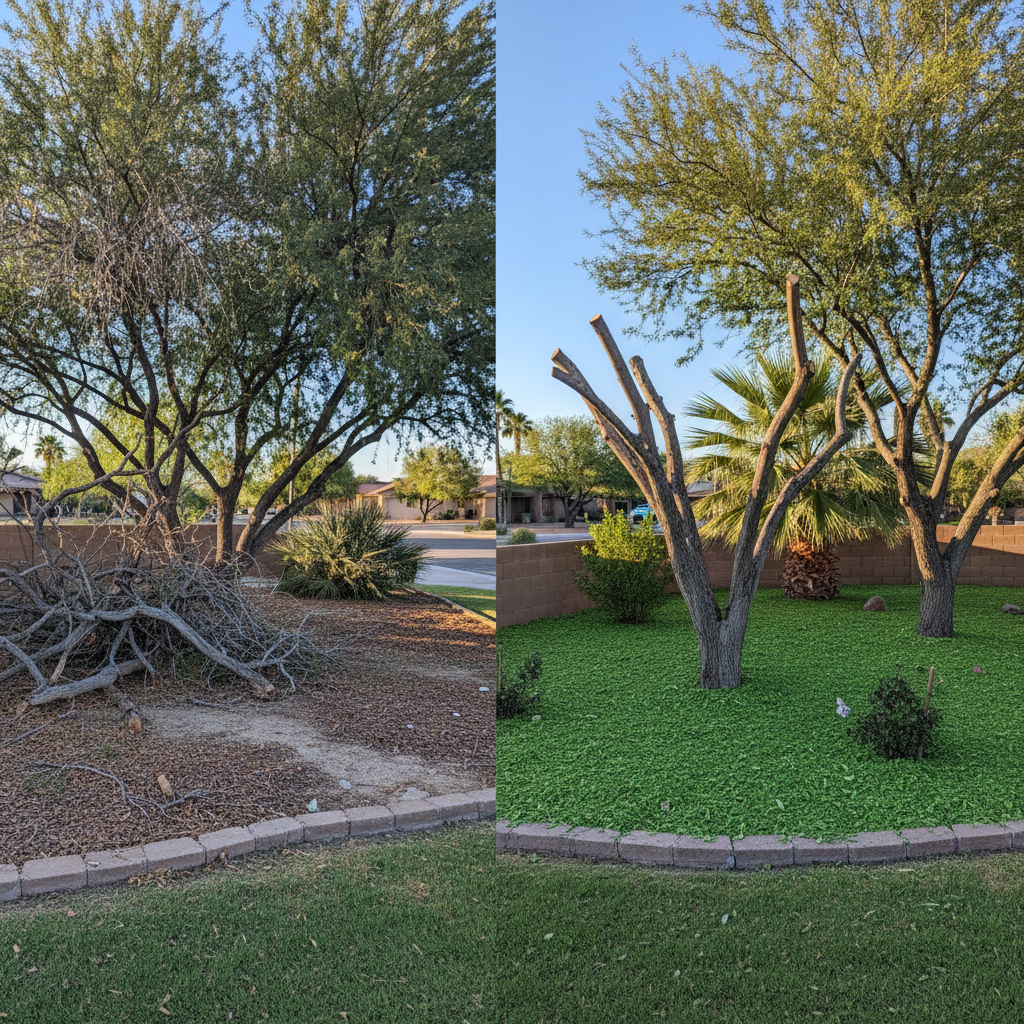
You've got trees in your yard, and at some point, you're going to need to prune them. It's just part of owning property, especially out here where the sun beats down and every bit of shade counts. But when it comes to cutting branches, there are a couple of main ways folks go about it, and not all of them are good for your trees, or your wallet in the long run. We're talking about thinning versus topping.
What's the Deal with Thinning?
Alright, let's start with thinning, because this is generally what I recommend for most healthy trees. When we thin a tree, we're selectively removing branches to improve the overall structure, increase light penetration, and promote better air circulation. Think about it like this: you're taking out some of the smaller, weaker branches, or ones that are growing inward, crossing, or rubbing against each other. You're trying to open up the canopy without changing the tree's natural shape too much.
The goal here is to keep the tree strong and healthy. By removing dead or diseased limbs, you're preventing problems from spreading. By allowing more light and air, you're reducing the chances of fungal growth and insect infestations, which are definitely issues we see around Coolidge, especially with our long, hot summers. It also helps the tree manage our monsoon winds better, as it's less likely to catch all the force.
Pros of Thinning:
- Healthier Trees: Promotes strong growth, reduces disease risk.
- Natural Appearance: Keeps the tree looking like, well, a tree.
- Longer Lifespan: A healthy tree lives longer and provides shade for years.
- Stronger Structure: Less prone to breaking in high winds.
Cons of Thinning:
- More Skill Required: It's not just hacking away; you need to know what you're doing.
- Can Be Slower: It's a more deliberate process than just cutting everything off the top.
Now, About Topping...
Okay, topping. This is where things get a bit controversial in the tree world. Topping is basically cutting off the top of a tree's main trunk or major branches, often leaving stubs. People usually do this because they think the tree is too tall, or they want it to grow back smaller. It's a quick way to reduce height, sure, but it's almost always a bad idea.
When you top a tree, you're causing a massive amount of stress. You're removing a huge portion of its food-producing leaves all at once. The tree then tries to recover by sending out a bunch of new, weak shoots right below the cuts. These shoots, often called