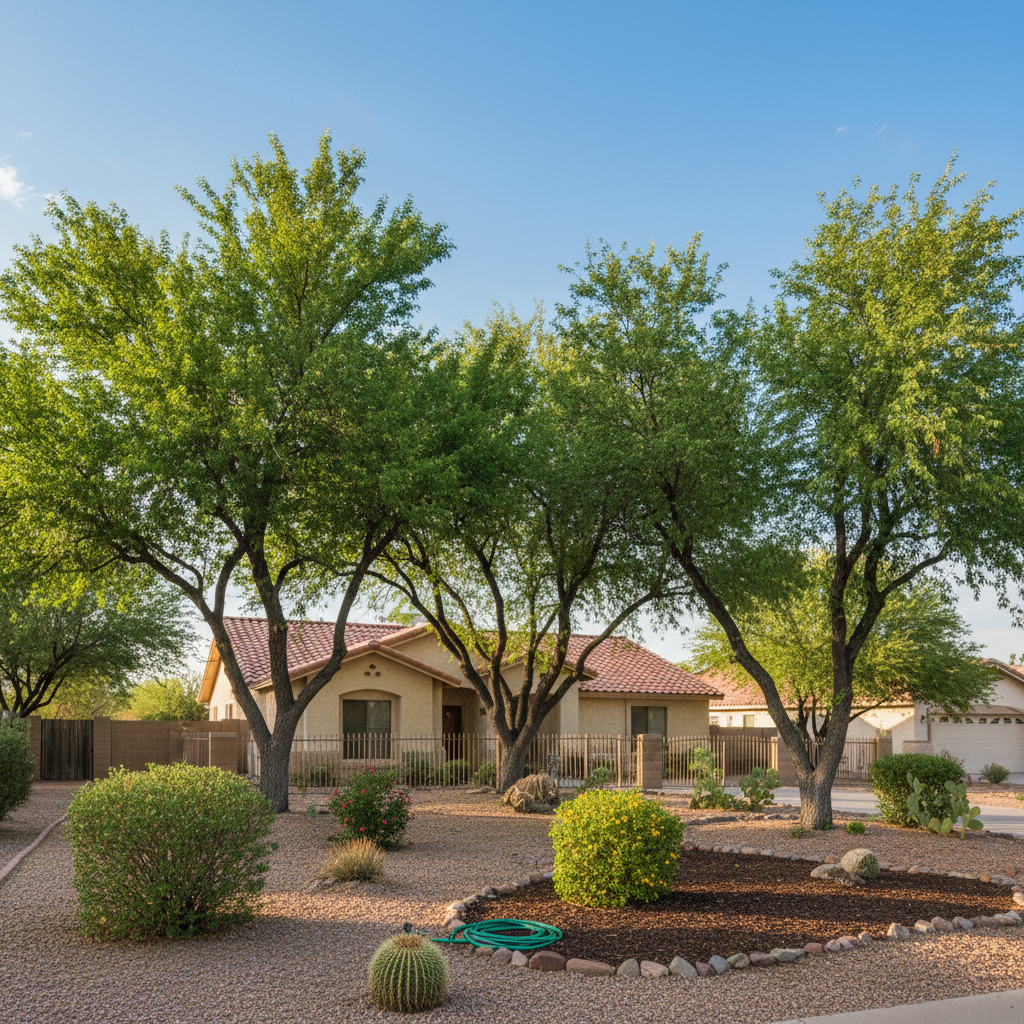
Alright, let's talk trees. More specifically, I want to chat about the big headaches I often see homeowners around Coolidge get into when they're trying to get some work done on their trees. I'm not here to scare anyone, just to give you the straight scoop from someone who's been in this business a good long while. You've got these beautiful trees, often desert-adapted species like mesquites or palo verdes, and they really add value and much-needed shade to your property, especially with our scorching summers. Protecting that investment means making smart choices about their health and care, doesn't it?
Mistake #1: Hiring the 'Chuck with a Chainsaw'
This one's probably the biggest, a real classic. Someone knocks on your door, spots your trees, and offers a super-low cash price to 'trim' them up. Or maybe you stumble upon a flyer that just seems a little too good to be true. My honest advice? Run the other way. And fast.
Here’s the deal: tree work is dangerous. I mean, seriously dangerous. If that 'Chuck' isn't properly insured, and someone gets hurt on your property – or worse, your house gets damaged – guess who's on the hook? That’s right, you are. In Arizona, if you hire an unlicensed contractor, you could be liable for injuries or damages. Legitimate tree services, like ours, carry general liability and workers' compensation insurance, and they won't hesitate to show you proof. Don't just take their word for it, though; actually call their insurance company to verify the policy is active.
Mistake #2: Skipping the Credentials Check
You wouldn't let an unlicensed doctor operate on you, would you? Your trees are living things, and proper care really does require expertise. Many homeowners just overlook checking for proper licensing and certifications. In Arizona, contractors performing certain work need to be licensed through the Arizona Registrar of Contractors. An unlicensed contractor might not even know the specific needs of our local trees, things like how to properly manage irrigation stress or address nutrient deficiencies common in our alkaline soils.
Look for companies that employ certified arborists. These folks have specialized knowledge in tree biology, diagnosis, and the right care techniques. They'll follow industry standards like ANSI A300, which means they won't be doing harmful things like 'topping' your trees – that can cause irreparable damage, you know. A reputable company will be totally transparent about their qualifications.
Mistake #3: Not Getting a Detailed Written Contract
A verbal agreement is worth about as much as the paper it's written on – which is to say, nothing. Always, always get everything in writing. I've seen way too many misunderstandings because people didn't have a clear contract. So, what should it include?
- Exact scope of work: Don't just say 'trim the mesquite.' Specify 'prune all dead, dying, diseased, and weak branches 1.5 inches or greater in diameter.'
- Start and end dates.
- Total cost: Make sure it's a single, all-inclusive price, not per-tree or hourly with no cap.
- Cleanup specifics: Who hauls away the debris? Will they chip it? Will they grind the stump and to what depth?
- Proof of insurance and licenses.
A good contract protects both you and the tree service, preventing headaches down the road, believe me.
Mistake #4: Ignoring Red Flags in the Quote Process
If a quote seems too good to be true, well, it probably is. Unlicensed operators can offer lower prices because they don't have the overhead of insurance, proper equipment, or trained staff. But that 'cheap' job can easily end up costing you double or triple when you have to hire a real pro to fix their mistakes or deal with damages.
Other red flags to watch out for:
- No in-person estimate: A good company needs to actually see the tree, its condition, and its surroundings to give an accurate quote.
- Pressure to decide immediately: Legitimate businesses don't need to strong-arm you into anything.
- Lack of reviews or bad reviews: Check online reviews, but look for detailed ones that mention specific work and how issues were handled.
- Outdated or unsafe equipment: If their gear looks like it's from the last century, that's a problem, pure and simple.
Mistake #5: Waiting Too Long to Act
I totally get it, life gets busy. But delaying tree health and care can turn a small, manageable problem into a major, costly one. Early signs of decline, like yellowing leaves (chlorosis), premature leaf drop, or unusual spots on bark, often point to underlying issues like nutrient deficiencies or pests common in our desert climate, such as the Palo Verde root borer. Catching these early can save the tree and your wallet.
Proactive care, things like regular inspections, helps identify problems before they get severe. If a tree becomes a hazard – leaning, dead limbs, or near power lines – waiting only increases the risk to your property and your liability. Sometimes, there's just no saving a tree, and removal becomes necessary to protect everything else around it.
At Coolidge Tree Service, we really believe in doing things right the first time. We've seen firsthand what happens when homeowners cut corners or don't do their homework. Your trees are a valuable part of your property, and they truly deserve professional, knowledgeable care. Don't let a bad hiring decision turn your tree health project into a costly regret.