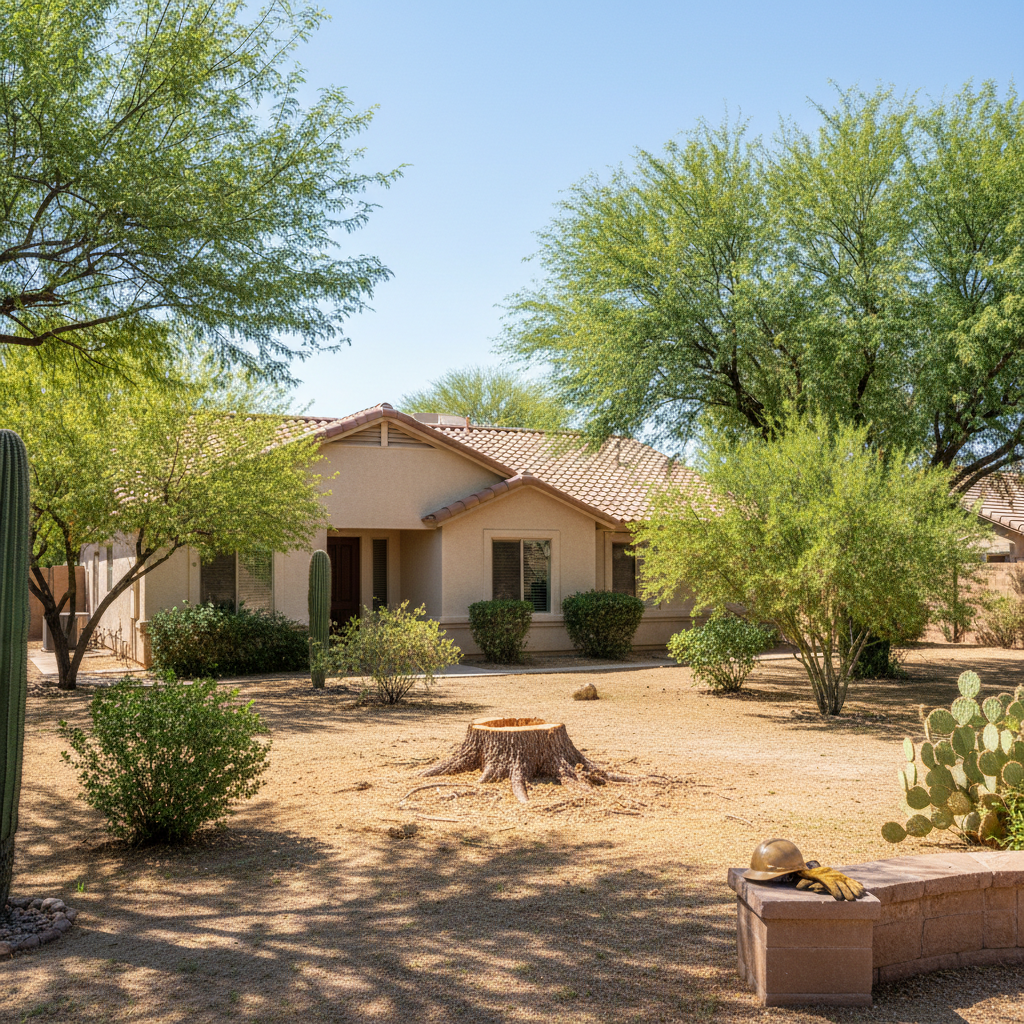
You've got a tree that needs to go. Maybe it's dead, diseased, or just too close to your house in one of those older neighborhoods near the high school. Whatever the reason, you're probably wondering, "When's the best time to get this done?" It's a fair question, and here in Coolidge, our climate makes it a little different than up north.
The Best Time for Tree Removal in Coolidge
Honestly, you can remove a tree any time of year if it's an emergency or a hazard. But if you've got some flexibility, there are definitely better times than others for planned removals. For us, the sweet spot is usually late fall through early spring. Think November to March.
Why then? A few reasons:
- The heat isn't trying to kill us. Working in 110-degree heat is brutal on equipment and even harder on the crew. Cooler temperatures mean safer working conditions, less stress on our gear, and often, a more efficient job.
- Trees are less active. Deciduous trees have dropped their leaves, making it easier to see the full structure and plan cuts. Even our evergreens slow down a bit in their growth cycle.
- Less stress on your yard. While we're always careful, moving heavy logs and equipment over soft, actively growing grass or plants in the summer can cause more damage. In the cooler months, your landscape is often more dormant and resilient.
Now, if you've got a tree that's clearly a risk – leaning badly, major storm damage, or showing signs of advanced disease – don't wait. Get it looked at immediately. Safety always comes first, regardless of the season.
Coolidge Weather and Tree Work: What to Watch For
Our desert weather is a beast, and it plays a huge role in tree removal. Here's what I'm always keeping an eye on:
High Winds: This is a big one. When the wind picks up, especially those strong gusts we get before a monsoon or during a dust storm, tree removal becomes extremely dangerous. Falling branches can become projectiles, and controlling the direction of a falling tree is nearly impossible. We won't work in high winds, period. It's just too risky for my crew and your property.
Extreme Heat: I mentioned this already, but it bears repeating. While we're used to the heat, there's a limit. If it's pushing 115 degrees, we'll often reschedule or start super early in the morning to beat the worst of it. Dehydration and heat stroke are real concerns, and a tired, overheated crew isn't a safe or effective one.
Monsoon Storms: These are tricky. The rain itself isn't usually the problem, unless it makes the ground too muddy for equipment. It's the sudden, violent winds and lightning that come with them. We'll always keep an eye on the forecast and adjust our schedule if a big storm is rolling in.
Protecting Your Investment Year-Round
Getting a tree removed is an investment in your property's safety and aesthetics. But what about the trees you're keeping? You want them to thrive, right?
Here's some straight talk from Coolidge Tree Service:
- Water, Water, Water: Especially during our long, hot summers. Even established desert trees need supplemental water. Deep, infrequent watering is better than frequent shallow sprinkles. Check the soil moisture around your trees regularly.
- Proper Pruning: Don't just let anyone hack at your trees. Proper pruning removes dead or diseased branches, improves air circulation, and helps maintain a strong structure. Doing it right prevents future problems and extends your tree's life.
- Pest and Disease Monitoring: Walk around your yard once a month and really look at your trees. Are there strange spots on the leaves? Holes in the bark? Unusual growth? Catching problems early can save a tree.
- Mulch Matters: A good layer of organic mulch (like wood chips) around the base of your trees helps retain soil moisture, regulates soil temperature, and suppresses weeds. Just keep it a few inches away from the trunk itself.
Taking care of your trees is a year-round job, especially in our tough Arizona climate. If you've got questions about a specific tree or need help figuring out the best plan for your property, give us a call. We're here to help you keep your landscape looking good and staying safe.