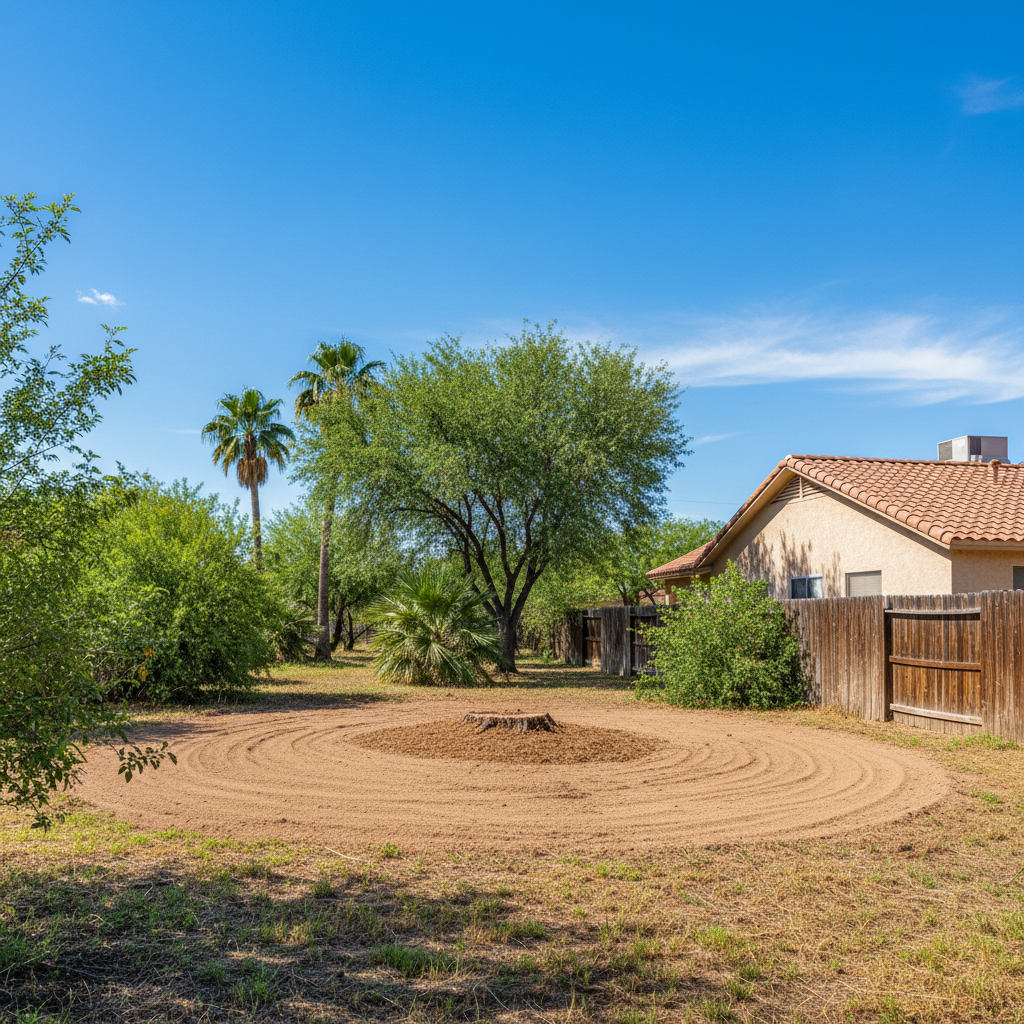
So, you finally got that tree removed. Maybe it was a huge mesquite practically touching your roof, a dead palo verde, or just something in the way of your big new project. Good for you! The immediate danger is gone, and your yard looks a lot clearer. But here's the thing: tree removal isn't just about cutting down the tree and hauling it off. What happens next – and how you take care of the spot – really makes a difference in the long run.
Making the Work Last: What to Do After Tree Removal
When we talk about "making the work last," we're mostly thinking about the stump and the dirt around it. If you chose stump grinding, that's a smart move. Grinding gets rid of the part of the stump you can see and a good chunk of the root flare, but it won't get every single root. Especially with some of our desert trees like mesquites or ironwoods, those roots can spread out a lot and be pretty tough.
After grinding, you'll have a hole filled with wood chips and soil. This spot is perfect for new growth, both from any leftover root pieces and from stubborn weeds. You'll want to fill that hole with some good topsoil. Don't just leave it full of wood chips; they'll break down and create a dip, plus they can soak up nitrogen from the soil, making it hard for anything else to grow. Once it's filled and level, you can lay sod, plant new shrubs, or even pour concrete if that's what you're planning. Just make sure the ground is firm and packed down well before you do anything permanent there.
If you skipped grinding the stump, well, you've got a different challenge on your hands. Stumps can sprout new growth, especially from trees like mulberries or even some of our native acacias. You'll need to hit those sprouts with an herbicide made specifically for woody plants, or you'll be out there constantly trimming them back. It's a never-ending fight if you don't deal with the root system.
Regular Upkeep: Keeping the Area Neat
Once the initial work is done, keeping things tidy is pretty simple. It's mostly about looking around and acting fast.
- Watch for Sprouts: Even after grinding, some root bits might try to send up new shoots. Keep an eye out for these, especially near where the stump used to be. Pull them or snip them off as soon as you spot them. The smaller they are, the easier to handle.
- Weed Control: Disturbed soil around a removal site is like a magnet for weeds. Stay on top of them. Pulling them by hand works great for small spots, or you could use a pre-emergent herbicide if you're not planning to plant anything new right away.
- Check for Sinking: If you filled in a stump grind hole, the soil might sink over time as the remaining wood chips decompose. You might need to add more soil now and then to keep the area level. This is especially true here in Coolidge, where our caliche-rich soils can pack down and shift differently than softer dirt.
- Watering: If you've put in new grass or plants, follow their specific watering instructions. If it's just bare ground, you still want to make sure water drains well and prevent erosion, especially during our monsoon downpours.
Warning Signs of Trouble: What to Look For
Even with good care, sometimes problems pop up. Knowing what to look for can save you a lot of grief later on.
- Sprouting That Won't Quit: If you're always fighting new shoots from the old stump or roots, it means the root system is still very much alive and kicking. This happens more often with certain tree types and if the stump wasn't treated or ground deep enough.
- Fungus Growing: Mushrooms or other fungi on or around the old stump mean it's decomposing. That's natural, but it can sometimes signal that parts of the root system are decaying and might attract pests or create soft spots in the ground.
- A Dip in the Ground: A noticeable dip or hole forming where the stump once was means the stuff underneath (wood chips, roots) is breaking down and the soil above is sinking. This could be a tripping hazard or affect anything you've built or planted there.
- Pest Activity: Termites, ants, or other wood-boring bugs love decaying wood, including old stumps and roots. If you see signs of these pests near the removal site, that's a big red flag.
When to Call a Pro
You're handy, I get it. Most of us here in Coolidge are. But some things are just better left to the experts. Don't hesitate to give Coolidge Tree Service a call if:
- You can't stop the sprouting. If you've tried treating it and it keeps coming back, you might need a more aggressive approach or deeper grinding.
- You're seeing a lot of pest activity. Especially with termites, you'll want to get a professional pest control company involved fast. We can help with getting rid of the wood, but they handle the bugs.
- There's a big, unexplained dip or unstable ground. This could mean a larger empty space underground or a drainage problem that needs an expert to check out.
- You're planning new construction or a major landscaping project over the old removal site. We can tell you if the ground is stable enough or if more work is needed to prevent future issues with foundations, patios, or big plantings.
- You have questions or worries. Honestly, if you're just not sure about something, pick up the phone. It's always better to ask than to let a small problem turn into a huge one. We've seen it all, and we're happy to share what we know.
Taking care of the spot after a tree removal isn't glamorous, but it's super important. A little bit of attention now can save you a lot of headaches and money down the road. Keep an eye on things, and don't be afraid to reach out if you need a hand.